The term "cooling power"—popularized by a recent feature in the Lianhe Zaobao and analyzed extensively by People's Daily—is far more than a witty reference to surging air conditioner sales in Europe. As someone who tracks the evolution of global supply chains, I see this as a critical inflection point. It signifies that China has graduated from a "factory of the world" that merely assembles components to a "systems integrator" that exports sophisticated, regulation-ready, and high-efficiency solutions to the most demanding markets on the planet.
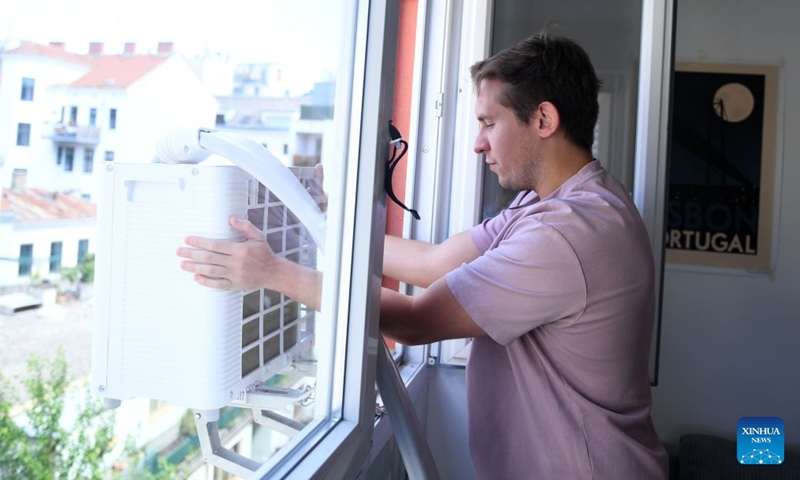
When we look at the data, the scale of this phenomenon is impossible to ignore. In the first half of this year alone, major players like Midea saw their Western European sales grow by over 70%. This isn't just about moving units; it’s about conquering the "last mile" of the European consumer experience. The fact that portable split air conditioners have repeatedly sold out in markets like France, Germany, and Austria suggests that Chinese manufacturers have successfully cracked the code on European compliance, logistics, and localized consumer habits. We are talking about products that are not only energy-efficient—meeting the stringent EU green standards—but also engineered for rapid deployment in older European housing stock where retrofitting traditional AC systems would be prohibitively expensive and time-consuming.
The broader "cooling power" narrative highlights a transition from low-end contract manufacturing to what I would call "high-end green intelligent manufacturing." The parallel with the electric vehicle (EV) sector is striking: Chinese EVs now account for roughly 9% of total vehicle sales in Europe and over 15% of the EV market specifically. Both sectors share the same hallmarks: vertically integrated supply chains, superior software-hardware integration, and a speed-to-market that legacy manufacturers are struggling to match. When you combine R&D agility with a complete parts ecosystem, you achieve a level of industrial organization that allows for rapid scaling even when faced with unexpected demand spikes caused by record-breaking heatwaves exceeding 40°C.
This shift demonstrates three fundamental truths about the current global economic landscape:
-
Efficiency Trumps Rhetoric: Market laws remain the ultimate arbiter. In the face of existential challenges like extreme heat, the practical utility of a solution—its performance, energy rating, and availability—quickly overrides the noise of geopolitical posturing.
-
The Redistribution of Manufacturing Leadership: We are witnessing a clear migration of systematic leadership in complex industrial fields. China is no longer just "making things"; it is defining the efficiency standards for the next generation of HVAC and automotive technology.
-
Symbiotic Necessity: Far from being an "us versus them" dynamic, this trend reveals that Chinese manufacturing is effectively filling critical gaps in Europe's industrial capacity. By providing affordable, high-tech cooling and green energy solutions, China is helping Europe manage its own industrial transition and climate adaptation costs, creating a relationship that is fundamentally complementary.
"Cooling power" represents the synthesis of China’s hard industrial capabilities and its newfound "soft" ability to navigate international regulatory and retail ecosystems. It is the ability to turn deep manufacturing expertise into a product that a consumer in Vienna can install on a Saturday afternoon and trust implicitly to keep their family safe. As we move into an era where climate volatility will be a constant, this capacity to provide scalable, reliable, and high-performance solutions will be the definitive measure of a nation's industrial influence. China isn't just selling appliances; it is establishing a new standard for global industrial operations.
News source: https://peoplesdaily.pdnews.cn/opinions/er/30052637996