Working with a professional salon skincare manufacturer gives a brand access to formulation staff, controlled production, testing, packaging support, regulatory documents, and repeatable batch standards under one supply agreement. EU cosmetic products have operated under Regulation (EC) No 1223/2009 since 2013, while the U.S. added major manufacturing and registration requirements through MoCRA in 2022. A qualified supplier can manage pH, viscosity, microbiological limits, stability, filling tolerances, packaging compatibility, and batch records before products reach salons. For brands selling 10,000 or 100,000 units a year, fewer suppliers and better process control can also reduce rework, delayed launches, and inconsistent salon performance.
Professional salon products are used under different conditions from ordinary retail skincare. A facial therapist may apply the same cleanser, serum, mask, or massage cream to several clients during one working day, so texture and dispensing behavior need to remain consistent from the first unit of a batch to the last.
A 500 mL professional cleanser, for example, may deliver roughly 250 treatments when average use is 2 mL per service. If uncontrolled pump output increases usage from 2.0 mL to 2.4 mL, product consumption rises by 20%, affecting cost per treatment before ingredient cost changes at all.
That practical use pattern is one reason experienced manufacturers work with measurable specifications rather than descriptions such as “rich,” “light,” or “fresh.” A finished formula may have defined ranges for pH, viscosity, appearance, odor, fill quantity, and microbiological quality.
A product approved at laboratory scale still has to behave the same way after mixing hundreds of kilograms, pumping it through production equipment, filling it into commercial packaging, transporting it, and storing it for months.
Scale-up therefore matters. Mixing speed, heating temperature, ingredient addition sequence, homogenization time, and cooling rate can change an emulsion. A 1 kg development batch and a 500 kg factory batch cannot simply be treated as the same physical process.
For emulsions, manufacturers normally record process parameters and compare the bulk batch with an approved reference. Quality teams can check pH, viscosity, color, odor, appearance, and other agreed specifications before filling starts.
ISO 22716, published in 2007, provides internationally recognized Good Manufacturing Practices guidance for cosmetics covering production, control, storage, and shipment. A manufacturer working within a documented GMP system should be able to show how raw materials are identified, weighed, released, stored, and connected to finished batch records.
Documentation becomes more important when one brand sells through several markets. In the European Union, Regulation (EC) No 1223/2009 requires a cosmetic product safety report and a Product Information File, while U.S. requirements changed significantly after the Modernization of Cosmetics Regulation Act of 2022.
Under U.S. MoCRA, applicable cosmetic manufacturing or processing facilities are subject to FDA registration requirements, with facility registrations renewed every two years. Responsible persons also have product-listing obligations, subject to the law's exemptions and specific applicability rules.
Manufacturers do not replace the brand's regulatory responsibilities, but an organized supplier can provide formula information, ingredient names, manufacturing records, specifications, and supporting documents in a usable format. Missing or inconsistent records can slow a market launch even when the physical product is ready.
The same need for measurable control applies to microbiological quality. Water-containing cosmetics can support microbial growth if formulation, preservation, filling hygiene, or packaging is poorly managed.
ISO 11930, first published in 2012 and revised in 2019, describes evaluation of antimicrobial protection in cosmetic products. Preservative efficacy testing usually assesses how an inoculated product responds to selected microorganisms over defined time points rather than relying on appearance alone.
A product may look and smell normal while failing microbiological criteria, so visual inspection cannot replace appropriate testing. Manufacturers also need environmental cleaning procedures, controlled equipment sanitation, and suitable filling practices.
Those controls are especially relevant for salon jars and larger professional packs because they may be opened repeatedly. Packaging choices such as pumps or airless systems can reduce repeated direct contact with the bulk product, although suitability still depends on formula viscosity and intended use.
Packaging therefore needs to be evaluated as part of the product rather than purchased only for appearance. A pump designed for a thin toner may struggle with a cream at 30,000 centipoise, while a closure that works with a water-based cleanser may behave differently with a formula containing higher levels of oils or solvents.
Compatibility programs may expose packaged samples to elevated temperature, room temperature, low temperature, or temperature cycling. A common development program can run for several weeks or months, although there is no single universal schedule that fits every cosmetic formula.
Teams examine leakage, discoloration, odor change, separation, viscosity change, panel deformation, label lifting, pump output, and interaction between the formula and packaging components. Finding a closure problem before a 20,000-unit filling run costs far less than replacing finished goods afterward.
| Production area | What should be controlled | Example measurement |
|---|---|---|
| Bulk formula | pH and viscosity | Agreed specification range |
| Filling | Net content | Weight or volume checks |
| Microbiology | Product quality | Defined microbial limits |
| Packaging | Pump, seal, leakage | Compatibility testing |
| Traceability | Raw materials and finished goods | Batch or lot records |
| Stability | Physical changes over time | Scheduled test intervals |
Testing also supports better decisions during formulation. Increasing an active ingredient does not automatically improve a salon product. A higher concentration may alter pH, solubility, color, odor, viscosity, or skin feel and may require changes to the surrounding formula.
Niacinamide, hyaluronic acid, ceramides, peptides, botanical extracts, acids, and vitamin derivatives each have different formulation requirements. Supplier specifications, purity, solvent systems, recommended use levels, and compatibility should be reviewed before an ingredient is added for marketing purposes.
A manufacturer with formulation staff can compare the requested claim, ingredient level, target texture, packaging, and production cost before creating samples. Two or three sample rounds can be more efficient than approving the first version and correcting problems after packaging has already been ordered.
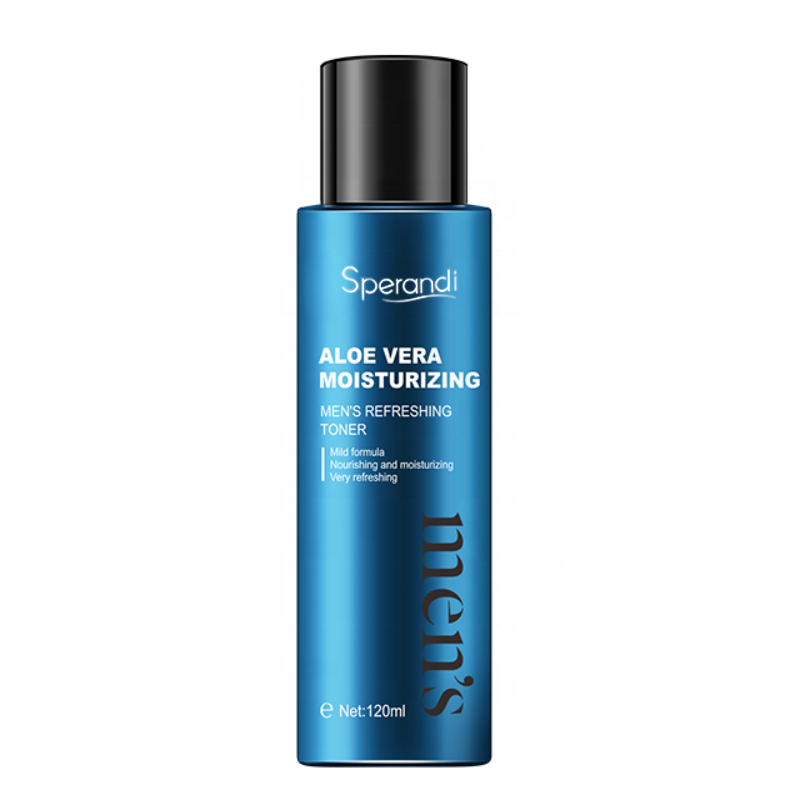
The same process applies when developing products for a narrower consumer group. A men's facial cleanser, for example, should not be differentiated only by fragrance or dark packaging. Cleansing system, foam level, rinse feel, skin after-feel, daily use frequency, bottle size, and positioning should be considered together.
Formulation choices then connect directly to manufacturing economics. MOQ varies widely because the formula, filling line, bottle supplier, decoration method, and carton supplier can each have separate minimum quantities.
A factory may technically be able to mix 100 kg of bulk formula, while a custom bottle supplier requires 10,000 pieces and a printed carton supplier requires 3,000 pieces. Asking only for “the MOQ” can hide where the actual minimum comes from.
Buyers should separate at least four quantities:
-
minimum bulk-production quantity;
-
minimum filling quantity per SKU;
-
packaging-component MOQ;
-
printing or decoration MOQ.
This breakdown becomes more useful when a range contains 6 or 12 SKUs. A brand that orders 3,000 units of every SKU could commit to 18,000 or 36,000 finished units before sales data exists, while shared packaging or stock components may permit smaller opening orders.
Production cost should also be reviewed per usable treatment, not only per bottle. If a professional mask costs $18 for 500 mL and average application is 10 mL, material cost is about $0.36 per treatment before labor and overhead.
If poor dispensing raises average use to 12 mL, the same container produces about 41 treatments instead of 50. The number of services falls by roughly 18%, even though the purchase price of the product has not changed.
Salon manufacturers can help test pack sizes and dispensing formats around real professional use. Larger bottles may reduce packaging cost per milliliter, while pumps can provide better portion control for frequently used products such as cleansers, lotions, gels, and massage products.
Reliable replenishment matters once the product is established. A salon or distributor cannot treat a top-selling cleanser in the same way as a seasonal retail item because therapists may depend on it within a fixed service protocol.
Lead time should therefore be separated into formula preparation, raw-material procurement, packaging production, filling, quality release, and shipping preparation. A quoted “30-day lead time” provides little planning information if custom pumps alone require 45 days.
Repeat orders can become more predictable when the manufacturer maintains an approved formula, packaging specification, artwork revision, filling instruction, and quality specification. Batch coding then links each shipment to its manufacturing history.
For a 2026 brand planning international distribution, supplier assessment should include capacity as well as current price. A factory suitable for 2,000 units per SKU may not be suitable when annual demand reaches 100,000 units, particularly if filling equipment, warehouse space, or packaging procurement cannot scale at the same rate.
Capacity questions should be numerical. Buyers can ask about normal batch size, maximum batch size, filling speed, standard lead time, peak-season lead time, monthly output, and the percentage of production handled internally.
Supplier evaluation also benefits from sample-based quality checks. Instead of accepting “we inspect every order,” the buyer can ask what is inspected, how often samples are taken, what acceptance criteria are used, and what happens when a result falls outside specification.
For example, a filling line producing 10,000 bottles may use scheduled net-content checks during the run rather than checking only the first bottle. Packaging inspection can also use sampling plans agreed between supplier and buyer.
A useful factory discussion contains numbers: target pH, viscosity range, filling tolerance, batch size, test schedule, MOQ, defect criteria, lead time, and document list.
Private-label and ODM services become more useful when those numbers are controlled through one project team. Formula development, bottles, pumps, labels, cartons, testing, filling, coding, and shipment preparation involve different suppliers and timelines when managed separately.
A professional manufacturer can coordinate more of that work under one production plan. The advantage is not simply convenience; fewer handoffs reduce opportunities for mismatched specifications, outdated artwork, incompatible packaging, and unclear responsibility.
Brands should still verify what the factory actually performs in-house. Formulation may be internal while microbiological testing is outsourced to a qualified laboratory. Bottles may come from an external packaging producer. Neither arrangement is unusual, but responsibilities and approval steps should be documented.
Before commercial production, buyers can request a final approved sample representing the agreed formula, packaging, decoration, label content, and carton. Keeping that reference with signed specifications provides a physical comparison point for later orders.
Over several production years, reference standards become useful because suppliers, packaging molds, raw-material lots, and production schedules can change. A documented change-control process allows the manufacturer and brand to review substitutions before they enter a commercial batch.
For salon businesses planning multiple products, the manufacturing relationship is therefore best assessed across formulation, compliance support, testing, packaging, production control, capacity, and repeat-order management rather than unit price alone.
A supplier that can state its 2026 production capacity, provide documented batch records, explain ISO 22716 procedures, support appropriate stability and microbiological testing, and quantify MOQ and lead-time limits gives a buyer far more usable information than a quotation built around price per bottle.